
If you’ve ever been told your website needs an SEO audit but weren’t entirely sure what that means in practice, you’re not alone.
It’s one of the most common questions I hear from business owners and marketing leads, and it’s a fair one. The term gets used broadly, and what one person calls an audit can vary significantly from what another delivers.
Let me break down what a thorough SEO audit actually covers, why each element matters, and what you should expect to get from one.
So, What Is an SEO Audit?
An SEO audit is a structured review of your website’s performance across the factors that influence how well it ranks, how easily it can be found, and how effectively it converts the traffic it receives.
It’s not a single check. It’s a process that looks at your site’s technical foundations, content quality, structure, and compliance with current best practices, and identifies what’s working, what’s broken, and what needs to change.
For some businesses, an audit is the starting point before any SEO work begins. For others, it’s a diagnostic tool when something has gone wrong, such as a ranking drop, a traffic loss, or the aftermath of a site migration.
Either way, the goal is the same… clarity. A clear picture of where your site stands and a prioritised roadmap for what to address.
Technical SEO
The technical foundation of your site is where most audits begin, and for good reason. Even the best content won’t perform if search engines can’t properly access, crawl, and index your pages.
A technical SEO audit covers:
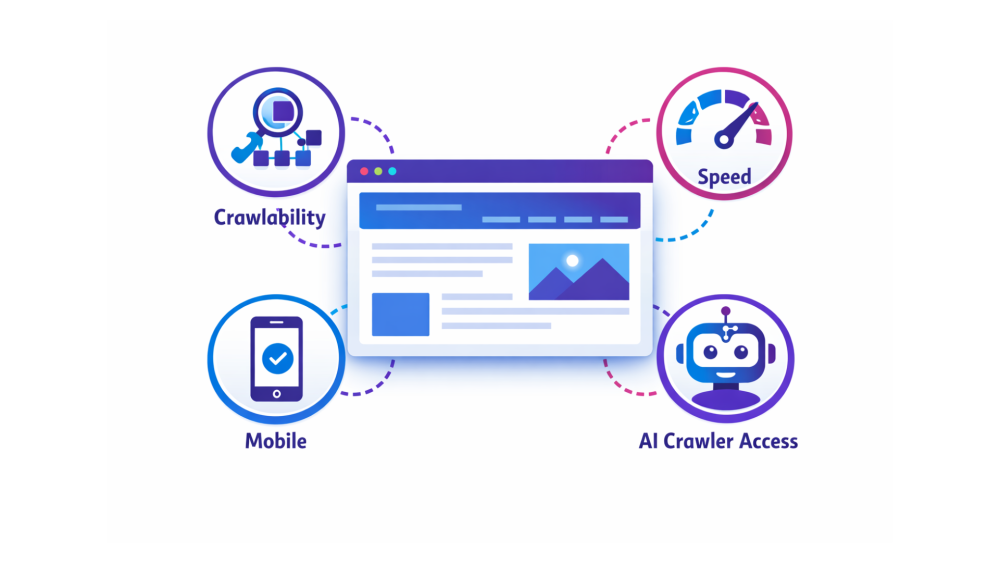
Crawlability and indexation
Are search engines able to access your pages? Are the right pages being indexed, and are any important pages being accidentally blocked? Issues here can silently prevent your content from appearing in search results entirely.
Site architecture
Is your site structured in a way that distributes authority effectively and makes it easy for both users and search engines to navigate? A poorly structured site creates confusion for crawlers and friction for users.
Page speed and Core Web Vitals
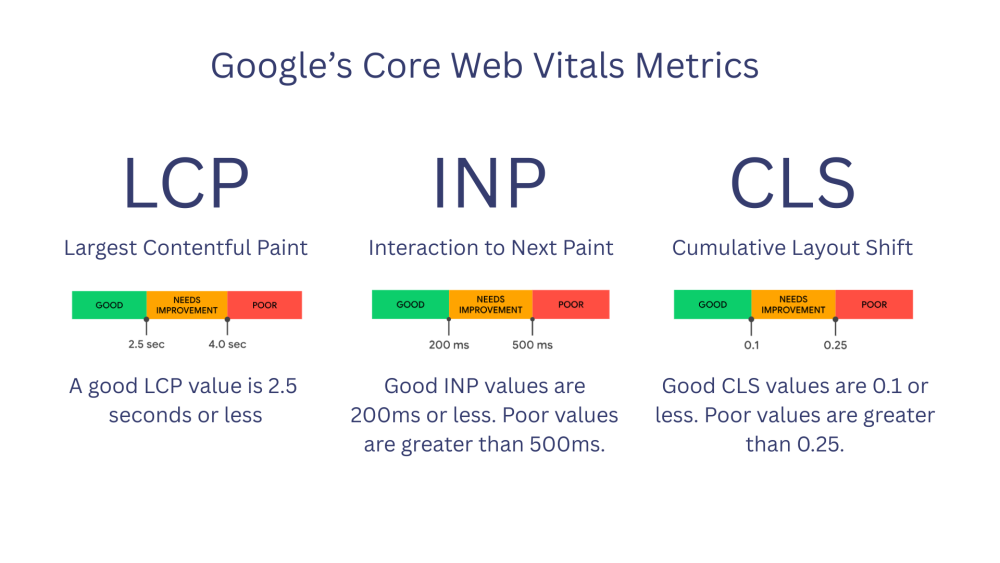
Google uses Core Web Vitals as a ranking signal, measuring load speed, interactivity, and visual stability. Slow or unstable pages frustrate users and are penalised in rankings. An audit identifies where performance is falling short and what’s causing it.
Mobile experience
Google uses mobile-first indexing, meaning your mobile site is the primary version it evaluates. Technical issues that only appear on mobile can significantly impact your visibility.
JavaScript rendering
Many modern websites rely heavily on JavaScript to display content. If search engines can’t render that JavaScript correctly, content that’s visible to users may be invisible to crawlers. This is a particularly common issue on SaaS and ecommerce sites.
LLM and AI crawler accessibility
As AI-powered search becomes a more significant source of visibility, ensuring your site can be accessed and rendered by AI crawlers is increasingly relevant. Tools like ChatGPT, Perplexity, and Google’s AI Overviews rely on being able to access and interpret your content. Blocked crawl paths, heavy JavaScript pages that don’t render correctly, or a poorly structured robots.txt can limit how visible your content is across AI-driven discovery, not just traditional search. An audit reviews your site’s accessibility for both search engine and AI crawlers.
Duplicate content and canonical issues
Multiple pages competing with each other, or content being served under different URLs, dilutes authority and creates indexation problems. An audit surfaces these conflicts and provides a clear resolution path.
Content Quality and Structure
Technical issues are often the most urgent to fix, but content is where long term performance is built or lost.
A content audit looks beyond whether pages exist and asks whether they’re doing the job they’re supposed to do.
Keyword and intent mapping
Are your pages targeting the right terms? Is each page built around a clear, specific intent, or are multiple pages competing for the same searches? Keyword cannibalisation, where several pages target overlapping terms, is one of the most common issues I find in content audits and one of the most consistently overlooked.
Content quality and relevance
Does your content genuinely answer the questions your audience is searching? Thin content, outdated information, or pages that don’t match search intent are common barriers to ranking and conversion.
On-page optimisation
Title tags, meta descriptions, heading structure, and internal linking all influence how search engines understand and prioritise your pages. An audit reviews these elements across the site and identifies where improvements will have the most impact.
Content gaps
Are there topics or queries your audience is searching for that your site isn’t covering? A content audit identifies those gaps and helps prioritise what to build next.
Rankings and Penalty Recovery
If your site has experienced a sudden drop in rankings or traffic, an audit is the most reliable way to understand why.
Ranking drops can be caused by a wide range of issues such as algorithm updates, technical problems, thin content, or manual actions applied by Google. Without a structured audit, it’s difficult to pinpoint the cause accurately, and addressing the wrong issue wastes time and delays recovery.
Google Core Update impact
Google releases broad core updates several times a year, and these can significantly shift rankings. An audit in the aftermath of a core update identifies whether your site has been directly affected and what the most likely causes are.
Manual actions and penalties
A manual action is a penalty applied by a human reviewer at Google, usually for violations of Google’s guidelines. These can devastate visibility and require a specific resolution process. An audit identifies the issues causing the penalty and provides a roadmap for submitting a reconsideration request.
Unnatural or weak irrelevant link profiles
If your site has accumulated low quality or spammy backlinks over time, whether through past SEO practices or negative SEO attacks, these can act as a drag on performance. An audit reviews your link profile, highlights any areas of concern, and identifies how to strengthen going forward.
Website Migrations
A site migration is one of the highest risk events in SEO. Moving platforms, switching domains, or restructuring your site architecture can cause significant traffic and ranking losses if not handled correctly. Those losses can persist long after the migration is complete.
Pre-migration audits
Before any migration begins, an audit identifies existing technical issues, content problems, and indexation gaps that need to be resolved before the move. Carrying existing problems into a new platform compounds the risk.
A pre-migration audit also establishes a baseline, which provides a clear record of what’s ranking, what’s indexed, and how your site is performing before the transition, so any post-migration losses can be identified and addressed quickly.
Post-migration audits
Even well planned migrations can introduce problems. Redirect chains, broken internal links, missing canonical tags, and incorrect robots.txt configurations are among the most common issues that appear after a site goes live on a new platform.
A post-migration audit catches these issues early, before they compound into sustained traffic losses. The sooner problems are identified after a migration, the faster recovery tends to be.
Core Web Vitals and Technical Compliance
Core Web Vitals deserve their own focus because they sit at the intersection of user experience and ranking performance.
Google measures three key signals
Largest Contentful Paint (how quickly the main content loads), Interaction to Next Paint (how responsive the page is to user interaction), and Cumulative Layout Shift (how visually stable the page is as it loads).
Poor performance across these metrics doesn’t just affect rankings, it creates friction that drives users away before they’ve had a chance to engage with your content or take action.
An audit reviews your Core Web Vitals performance across both mobile and desktop, identifies the specific elements causing poor scores, and provides clear recommendations for improvement.
What You Should Receive From an Audit
A thorough SEO audit should leave you with more than a list of issues. It should give you:
- A clear, prioritised set of findings, not an overwhelming spreadsheet, but a structured report that distinguishes between critical issues, moderate improvements, and long term opportunities
- Explanations of why each issue matters, not just that it exists
- Actionable recommendations your development team, content team, or agency can act on directly
- A realistic sense of what addressing those issues is likely to achieve
The value of an audit isn’t in the findings themselves, it’s in the clarity and direction it provides. Done well, it removes guesswork and gives you a confident foundation for whatever comes next.
When Should You Get an SEO Audit?
An audit isn’t only for when something has gone wrong. Some of the most valuable audits are proactive ones, carried out before problems develop or before a major change is made to your site.
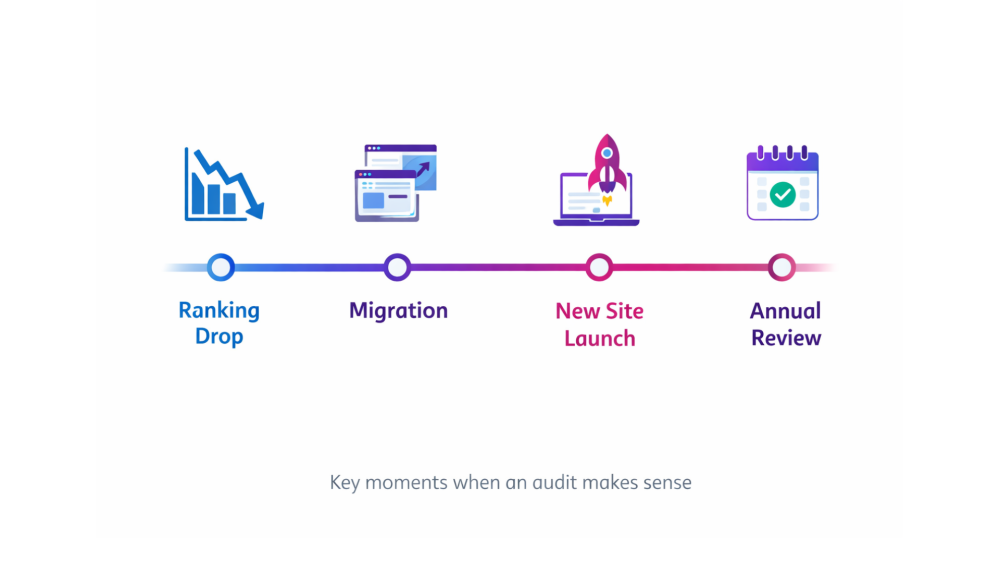
It makes sense if you are experiencing a ranking drop or unexplained traffic loss, planning a site migration or platform change, launching a new website, investing in SEO for the first time and want to understand your starting point, or simply haven’t had a full review carried out in the last 12 to 18 months.
If you’d like to understand what an audit would cover for your specific site, I will talk through what’s involved and what would be most useful for where you are right now. You can explore my SEO audit services or get in touch directly.