You’re getting traffic, so why isn’t it converting?
Traffic without conversion is one of the most frustrating positions to be in. You’re ranking. Possibly being recommended in AI Search and even through social…People are finding you. And yet the enquiries, the signups, the sales are not following.
This is one of the most common problems I work on, and it almost never has a single cause. It’s usually a combination of things, some sitting in SEO, some in conversion rate optimisation, and often in the gap between the two.
The Gap Between SEO and CRO
SEO and CRO are often treated as separate disciplines with separate owners. SEO brings the traffic. CRO converts it. Two teams, two sets of tools, two sets of reports.
The problem is that the disconnect between them is frequently where conversion fails. SEO focuses on getting people to the page. CRO focuses on what happens once they’re there. But if the wrong people are arriving at the wrong pages with the wrong expectations, no amount of conversion optimisation will fix that. And if the right people are arriving on well optimised pages but the SEO strategy hasn’t considered what they need at that stage of the journey, the same problem occurs.
Traffic that doesn’t convert is rarely purely a CRO problem. It’s almost always partly an SEO problem too.
The Most Common Reasons Traffic Doesn’t Convert
You’re Attracting the Wrong Audience
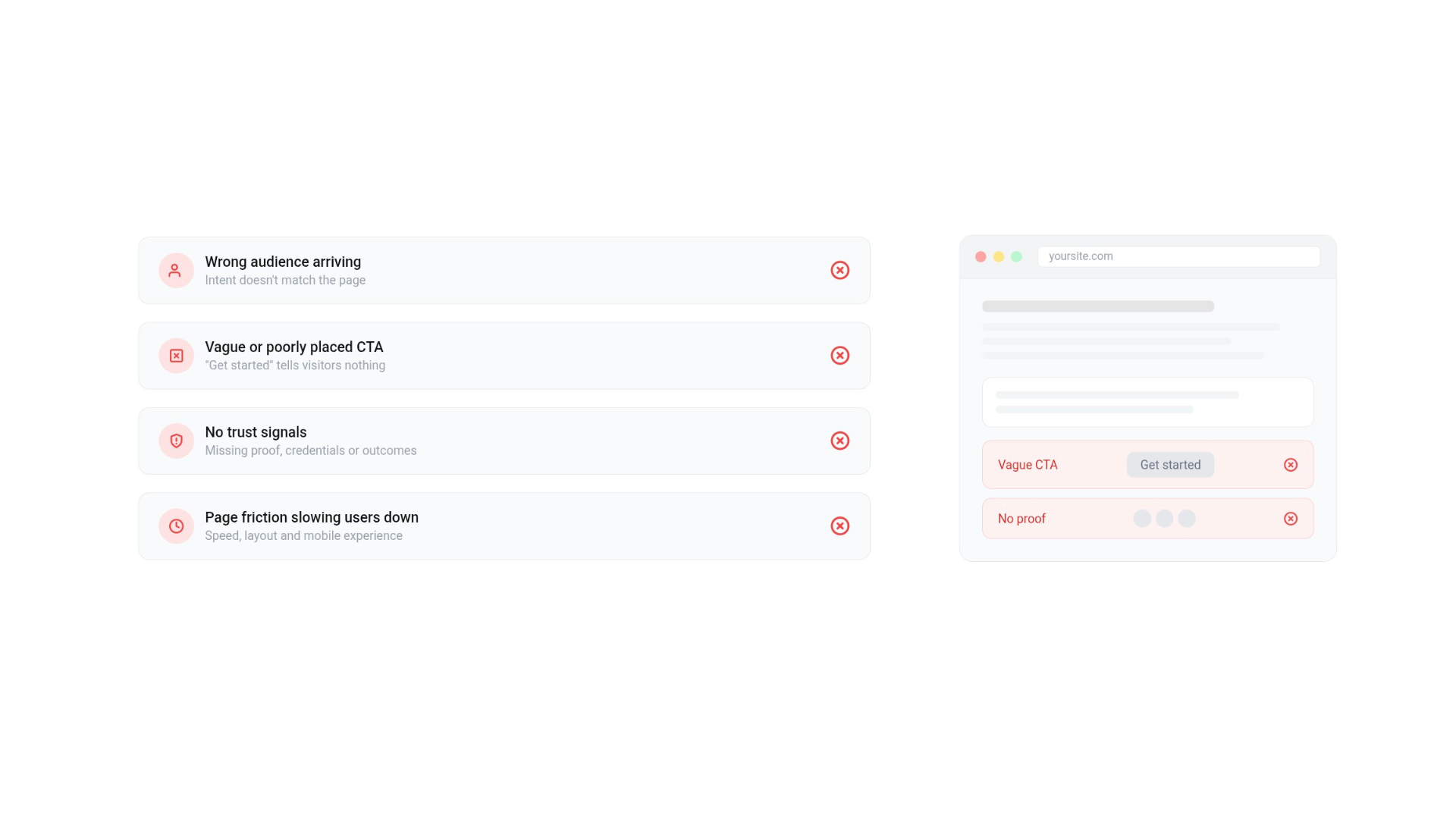
Not all traffic is created equal. A high volume of sessions from people who were never going to buy, sign up, or enquire is not a foundation to build on, it’s a classic vanity metric.
This happens when SEO targets broad, high volume keywords without considering intent. Ranking for a term that thousands of people search doesn’t help if those people are at a completely different stage of the journey to where your page is trying to meet them.
The fix starts with intent mapping. Understanding not just what people are searching, but why and whether your page is the right answer for that specific why.
Your Landing Pages Aren’t Matching What People Expected
When someone clicks a search result, they arrive with an expectation set by the title, the meta description, and the query that brought them there. If the page doesn’t immediately confirm they’re in the right place, they leave.
This is called a mismatch between search intent and page content. It’s one of the most common conversion issues and one of the easiest to overlook, because the page might look fine.
Review your highest traffic pages. Ask honestly: does the content above the fold immediately answer the question that brought someone here? If it takes more than a few seconds to confirm they’re in the right place, you’re losing people before they’ve had a chance to convert.
Your Calls to Action Are Too Vague or Too Early
A CTA that says ‘get in touch’ or ‘learn more’ on a page where someone has just arrived and is still orienting themselves is unlikely to convert. People need to understand the value before they’re asked to take action.
Equally, a page with no clear next step, or worse, multiple competing calls to action, creates confusion. When everything is a priority, nothing is.
CTAs that convert tend to be specific about what happens next, low risk in how they frame the commitment, and placed at the point where someone has consumed enough to feel ready.
Avoid
Ambiguous: started with what?
No clear expectation of what happens next
Can imply immediate commitment
Recommended
Specific: the next step is clear
Free removes the financial risk
Lower commitment than a trial or purchase
CTAs that convert are specific about what happens next, low risk in how they frame the commitment, and placed at the point where someone has consumed enough to feel ready to act.
Your Page Experience Is Creating Friction
A technically sound page that ranks well can still fail to convert if the experience of being on it is frustrating. Slow load times, layouts that don’t work on mobile, content that’s hard to scan, and navigation that makes it difficult to find what someone needs all add friction between arrival and action.
Core Web Vitals matter here, but so does the more human question of whether the page is genuinely easy and pleasant to use. Speed and usability are not just technical concerns. They directly influence whether someone stays long enough to convert.
Your Content Isn’t Building Enough Trust
Conversion is an act of trust. Before someone hands over their email address, picks up the phone, or makes a purchase, they need to feel confident they’re making the right decision.
Content that converts doesn’t just inform, it reassures. It demonstrates expertise, addresses objections, and gives someone a reason to believe the outcome they’re looking for is on the other side of taking action.
If your highest traffic pages are purely informational without any trust signals such as testimonials, case studies, clear credentials, or specific outcomes, you’re leaving the conversion work undone.
What to Look at in Your Data
Before making changes, it’s worth understanding where in the journey things are breaking down. A few places to start:
Engagement Rate by Landing Page
Which pages are people arriving on and immediately leaving? Low engagement on high traffic pages is a signal that either the wrong people are arriving or the page isn’t delivering what they expected.
Scroll Depth
Are people reading the page or bouncing before they reach the content or CTA that would actually convert them? If most visitors aren’t making it past the fold, the problem is likely in the first impression the page makes.
Conversion by Traffic Source
Organic traffic that converts well and organic traffic that doesn’t often come from very different types of queries. Breaking down conversion by source and query can reveal which parts of your SEO strategy are working commercially and which are driving volume without value.
Funnel Drop-off
Where in the journey are people leaving? If they’re reaching a contact page or checkout and leaving there, that’s a different problem to losing them on the landing page. Understanding which stage breaks helps you prioritise where to focus.
SEO and CRO Working Together
The most effective approach to traffic that doesn’t convert isn’t to optimise the page in isolation or to rethink the keyword strategy in isolation. It’s to look at both together.
That means asking:
Are we attracting the right people?
Is the intent behind the traffic aligned with what the page is designed to do?
Is the page delivering on its promise?
Does it immediately confirm visitors are in the right place and guide them toward the next step?
Is there a clear, low-friction path to action?
Can a visitor move from arrival to conversion without confusion or unnecessary steps?
Does the content build enough trust?
Does the content along that path give visitors the confidence to take action?
Traffic is an input. Conversion is the output. Getting more traffic to a page that isn’t converting is rarely the answer. Understanding why it isn’t converting and fixing that is where the real gains are.
Where to Start
If you’re looking at your analytics and seeing traffic without results, the most useful first step is usually an honest audit of your highest traffic pages against the questions above.
Not a technical audit for its own sake, but a commercial one. One that looks at whether the pages driving your organic traffic are actually set up to drive the outcomes your business needs.
That’s work I help businesses with regularly, whether that’s reviewing the SEO strategy behind the traffic, the page experience and content that receives it, or the gap between the two.
If your traffic numbers look healthy but your results don’t match, book a free discovery call or get in touch and we can look at where the disconnect is.
Why is my website getting traffic but no conversions?
Traffic without conversions usually signals a disconnect between who is arriving and what the page is offering. Common causes include mismatched search intent, vague calls to action, lack of trust signals, or a page experience that creates friction before someone reaches the point of action.
What is the difference between SEO and CRO?
SEO focuses on driving traffic to your website through organic search. CRO focuses on converting that traffic into enquiries, signups, or sales. The two disciplines are closely connected. The wrong traffic arriving at the wrong page creates a conversion problem that CRO alone cannot solve.
How do I know if my landing page is the problem?
Start with your data. Low engagement rates, high bounce rates on specific pages, and poor scroll depth are all signals that visitors aren’t finding what they expected. If high-traffic pages consistently produce low conversions, the page content, intent match, or user experience is likely the issue.
What makes a good call to action?
A good CTA is specific about what happens next, low risk in how it frames the commitment, and placed at the point where someone has consumed enough to feel ready to act. ‘Book a free discovery call’ typically outperforms ‘get in touch’ because it sets clear expectations rather than leaving the next step undefined.
Can SEO fix a conversion problem?
Not on its own, but the SEO strategy directly influences conversion. Targeting keywords with the wrong intent, attracting audiences at the wrong stage of the journey, or driving traffic to pages that aren’t built to convert are all SEO decisions that create conversion problems. Reviewing both together is almost always more effective than optimising one in isolation.