There’s a lot of AI content online right now.
You’ve seen it. The slightly off tone, the sentences that are technically correct, but feel like they were written by someone who has read about human emotion, rather than experienced it. The social posts that sound like a press release. The web copy that says a lot without saying anything at all.
And yet, someone still hit publish.
This isn’t a post arguing that AI has no place in content marketing, it does. Used well, it helps teams move faster, work smarter, and produce more at scale. But there’s a significant difference between using AI intelligently as part of a content strategy, and outsourcing your brand’s voice entirely. The data shows that consumers are noticing the difference, and responding to it.
What the Data Actually Says About AI Content and Consumer Trust
The disconnect between how brands feel about AI content and how their audiences receive it is one of the most important gaps in marketing right now.
Hootsuite’s research found that 50 to 60% of people distrust, or are put off by content they know is AI generated. More than a third are less likely to choose a brand using AI in their ads. NielsenIQ data shows similar patterns, with 55% of consumers feeling uncomfortable or frustrated on websites that rely heavily on AI generated articles and creatives.
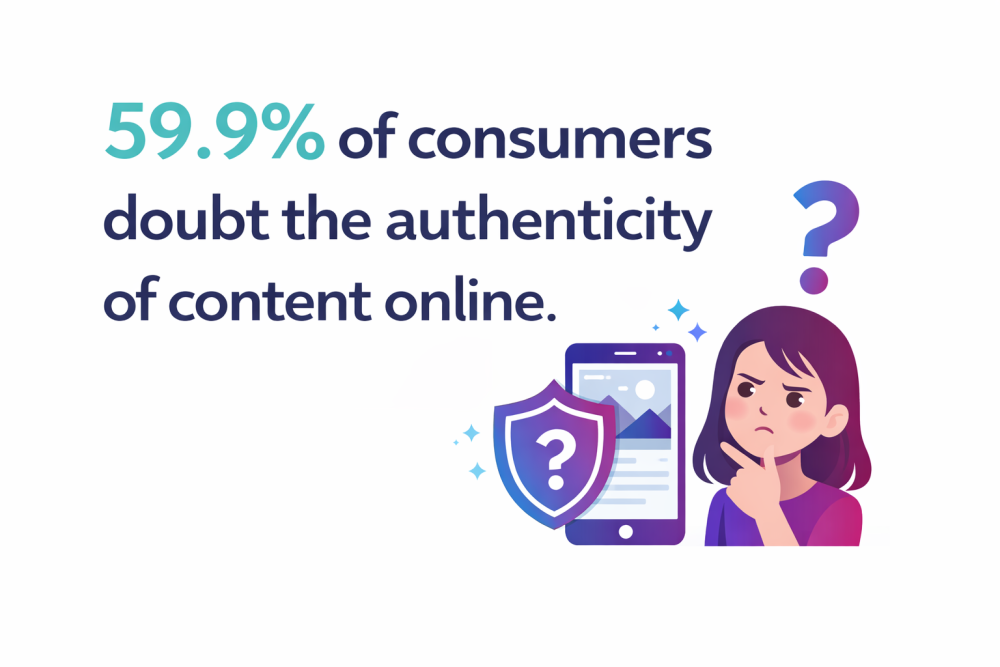
As AI-generated content has filled up our feeds, TrendWatching found that 59.9% of consumers now doubt the authenticity of the online content they encounter. And it matters more than ever: Accenture’s Life Trends 2025 report found that 62% of consumers say trust is an important factor when choosing to engage with a brand, up from 56% in 2023.
The engagement data reinforces this further:
- 52% of consumers report reduced engagement with AI content
- 62% are less likely to engage with AI generated social posts
- 55% say obvious AI use lacks human connection
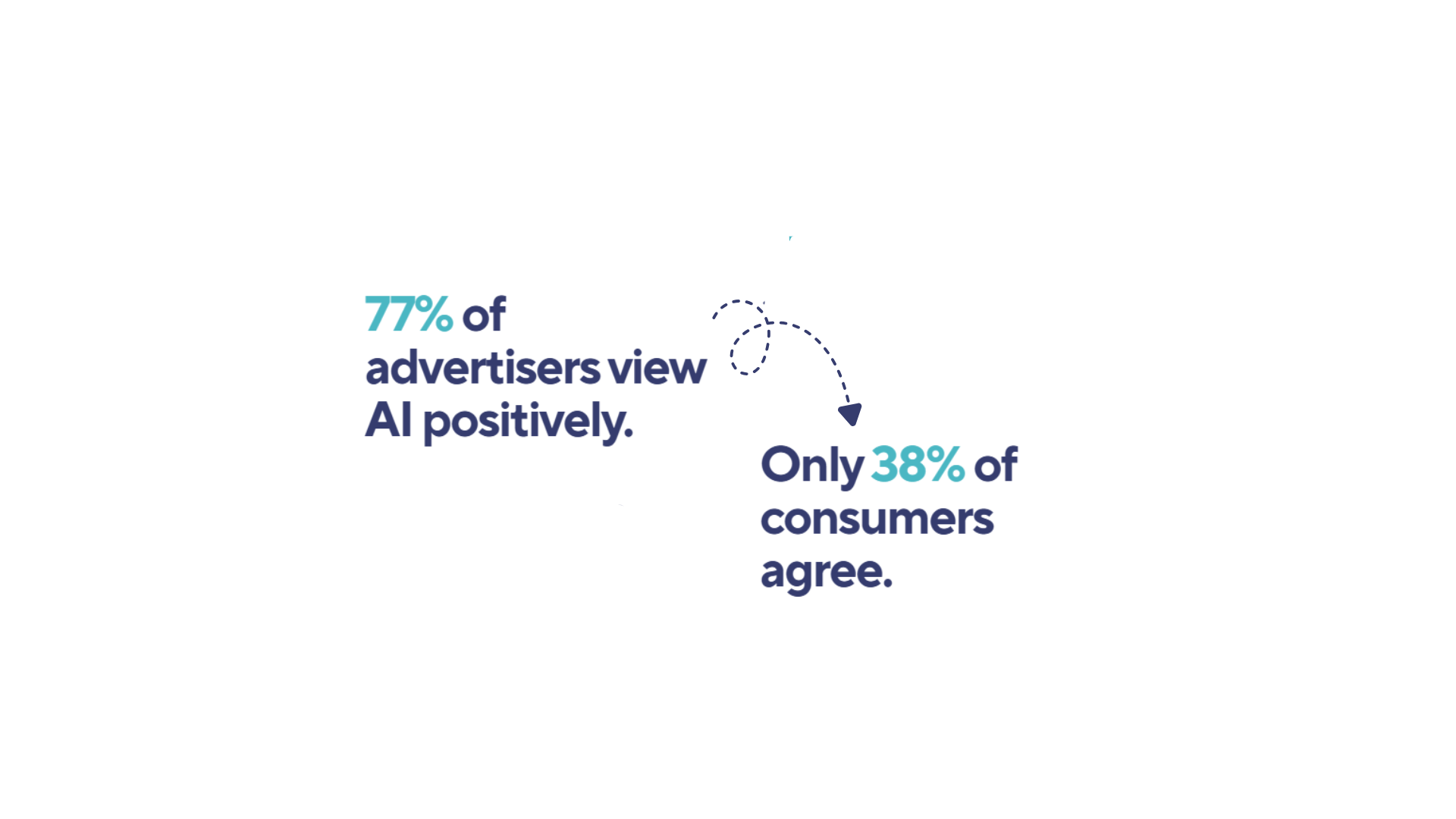
While 77% of marketers and 78% of creators believe AI effectively crafts emotionally resonant content, only 33% of consumers agree. Autofaceless highlights that’s a gap of more than 44 percentage points.
That gap is where brand trust is breaking down. Brands are optimising for speed and output. Audiences are looking for connection and authenticity. When those two things pull in opposite directions, conversion suffers.
Outside of text copy, we have creatives. These are the visual pathways to your brand. Getty Images research found that 98% of consumers agree that authentic images and videos are pivotal in establishing trust Gettyimages, a finding that extends well beyond visuals and into every piece of content a brand publishes.
AI in Content Isn’t the Problem. Lazy AI Is.
It’s worth being clear about what this is and isn’t saying.
AI tools are genuinely useful in a content workflow. Research, ideation, first drafts, repurposing, summarising and finding gaps, there are real efficiencies to be gained. The problem isn’t the tool. It’s what happens when the tool replaces the thinking rather than supporting it.
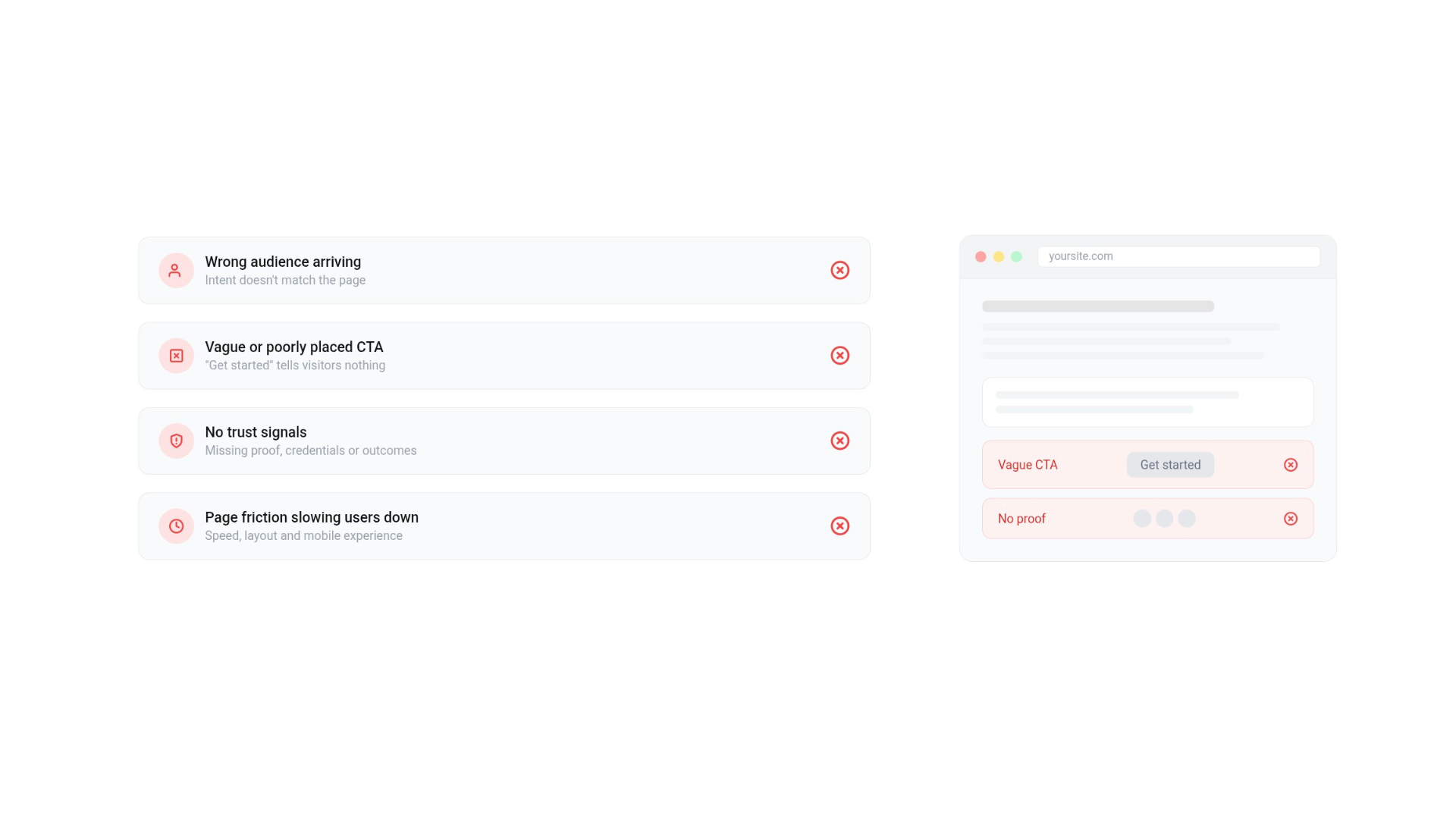
When content goes out without a human voice, without editing, without anyone asking “does this actually sound or look like us?”, that’s where brands lose people.
It has gone beyond the obvious tells. Yes, certain punctuation patterns and phrasing quirks are still there, but it’s deeper than that now. It’s in the tone that’s polished but hollow. The social post that hits all the right keywords but generates no real response. The about page that describes a company’s values without making you feel anything. The blog post that covers a topic thoroughly but leaves you with no sense of who wrote it or why they care, or did you even take anything away?
Audiences feel that absence even when they can’t name it. And the data shows they respond to it by disengaging, by trusting less, and by choosing elsewhere.
Baringa’s research found that 77% of consumers want to know when AI has been used to create content, either in whole or in part. And 31% would not be happy consuming content without knowing whether AI played a part at all.
Transparency and quality aren’t optional extras. They’re becoming baseline expectations.
Why Brand Voice Is a Commercial Asset
Content is often thought of primarily as a visibility tool. Get the keywords right, publish consistently, build traffic. That’s true and it matters. But content is also the primary way most businesses build the kind of trust that converts.
Before someone picks up the phone, fills in a contact form, or makes a purchase, they’ve usually spent time with your content. They’re reading your blog, scrolling your social posts, watching videos or spending time on your website. In that time, they’re making a judgement, not just about what you offer, but about whether they trust you.
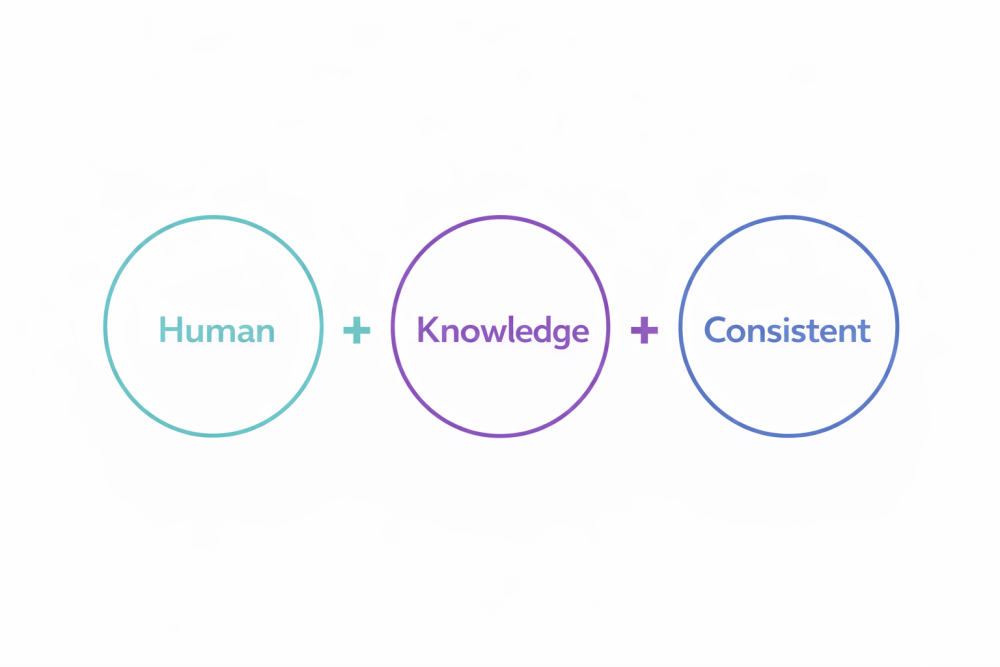
A brand voice that feels human, knowledgeable and consistent, does something that keyword optimised content alone can’t. It makes people feel like they’re in the right place.
This isn’t an unmeasurable thing. It shows up in engagement metrics, session duration, return visits, in conversion rates, and in the quality of enquiries you receive. Content that connects drives better commercial outcomes than just having content that exists for the sake of it.
The Review Process Is the Missing Step
Most of the lazy AI content that ends up online doesn’t fail because of the tool used to create it. It fails because nobody reviewed it honestly before it went live.
A review process for content, whether AI assisted or not, should ask some basic but important questions:
- Does this sound like us? Not a generic brand, not a polished but anonymous voice, but specifically us.
- Would we engage with this? If the answer is no, the audience won’t either.
- Does this add something? Genuinely, does it answer a question, offer a perspective, or give someone a reason to stop and read?
- Is there a human in here somewhere? A real point of view, a specific example, something that couldn’t have come from a template.
These aren’t complicated checks. But they’re the difference between content that builds a brand, and content that fills a feed.
Social platforms have their own performance metrics that can give great insight. Instagram have likes, shares, saves, and comments, whereas video platforms such as YouTube and TikTok have slightly different metrics such as engagement rate, watch time, video views and growth rate. All of these are key performance indicators as to how well your brand performs when put in front of an audience.
What Good Content Marketing Actually Does
The businesses that use content most effectively treat it as a strategic asset, not a box to tick.
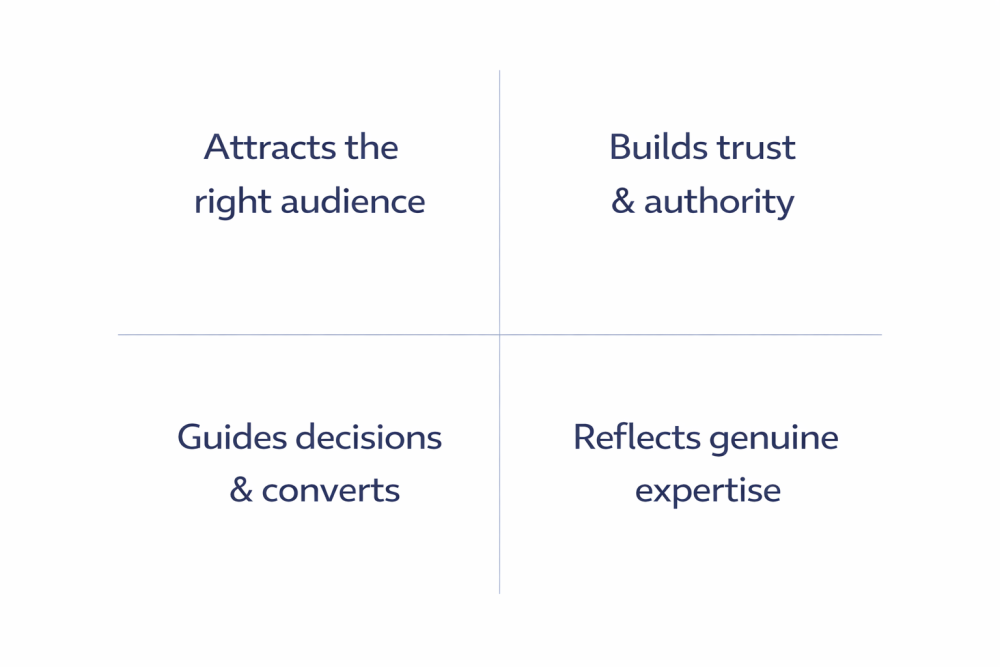
Good content does several things simultaneously. It attracts the right audience through search. It builds trust by demonstrating genuine expertise and a consistent voice. It moves people through a decision by answering the questions they’re actually asking. And it converts, not through pressure, but through the accumulated effect of someone feeling confident they’ve found the right person or product.
That requires human thinking. An understanding of who the audience is, what they need at each stage, what language resonates with them, and what the brand actually stands for. AI can support that process, but it cannot replace it.
The brands getting this right are the ones treating content as a genuine reflection of their brand. Something worth investing in, reviewing carefully, and holding to a standard. Not because it’s a nice idea, but because it’s what drives results.
A Simple Test Before You Publish
Before any piece of content goes live regardless if it’s a blog post, social post, web copy, ad or video, read and listen to it as your audience would.
Review your content not as someone who knows the business, knows what was intended, and knows what the brief was, but as someone encountering your brand for the first time, with no context, deciding in a few seconds whether this is worth their attention.
If it sounds like everyone else, it needs work. If it doesn’t sound like you, it needs work. If it’s technically correct but leaves you feeling nothing, it needs work.
The standard isn’t perfection. It’s authenticity. Content that sounds like a real person, with a real point of view, who genuinely cares about the person reading it.
That’s what builds brands, is memorable for the right reasons, and converts.
Frequently Asked Questions for using AI in Content and SEO.
Is AI content bad for SEO?
AI content isn’t inherently bad for SEO. Google’s guidance focuses on quality, relevance, and helpfulness rather than how content was produced. The problem arises when AI content is published without review, resulting in thin, generic, or inaccurate pages that don’t genuinely serve the user. Content that lacks depth, originality, or a clear point of view tends to underperform regardless of how it was created.
Does Google penalise AI generated content?
Google does not penalise content simply for being AI generated. It penalises content that is low quality, spammy, or created primarily to manipulate search rankings rather than help users.
The distinction matters as, well edited and genuinely useful AI assisted content can perform well. Whereas mass produced, unreviewed AI content is more likely to not adhere to quality guidelines.
How does lazy AI content affect brand trust?
When audiences are presented with content that feels generic, emotionless, or obviously machine produced, it signals that a brand hasn’t invested in communicating with them properly.
Over time that has a negative impact on brand trust, not through a single poor piece of content, but through the cumulative effect of a brand that consistently sounds like everyone else.
The data shows that consumers disengage, trust less, and are less likely to convert when they sense a lack of human connection in brand content.
Why does human content perform better than AI content?
Human-led content tends to perform better because it reflects genuine expertise, specific experience, and a consistent brand voice, these are qualities that build trust with both readers and search engines over time.
It also tends to be more specific, more original, and more likely to say something that couldn’t be found elsewhere.
These are the qualities that drive engagement, return visits, and ultimately conversion.
What is the difference between AI assisted content and AI generated content?
AI assisted content uses AI tools to support the process. The research, ideation, drafting and editing, while a human retains ownership of the voice, judgment, and final output.
AI generated content is produced by AI with little or no human involvement or review.
If your content is going live and you’re not sure it sounds like you, converts the way it should, or is actually building trust with the right audience, that’s worth looking at.
Content strategy, creation, and auditing are all things I help with. Take a look at my content marketing services or get in touch and we can talk through where the gaps are.