Most SaaS companies underestimate SEO until they start paying too much for every lead.
Paid acquisition works. But it works as long as you’re paying. The moment the budget stops, the pipeline stops with it. SEO compounds. A well ranked page from six months ago is still bringing in signups today. That’s the fundamental difference, and for SaaS businesses specifically, it’s a meaningful one.
Why SaaS Companies Need to Think About SEO Differently
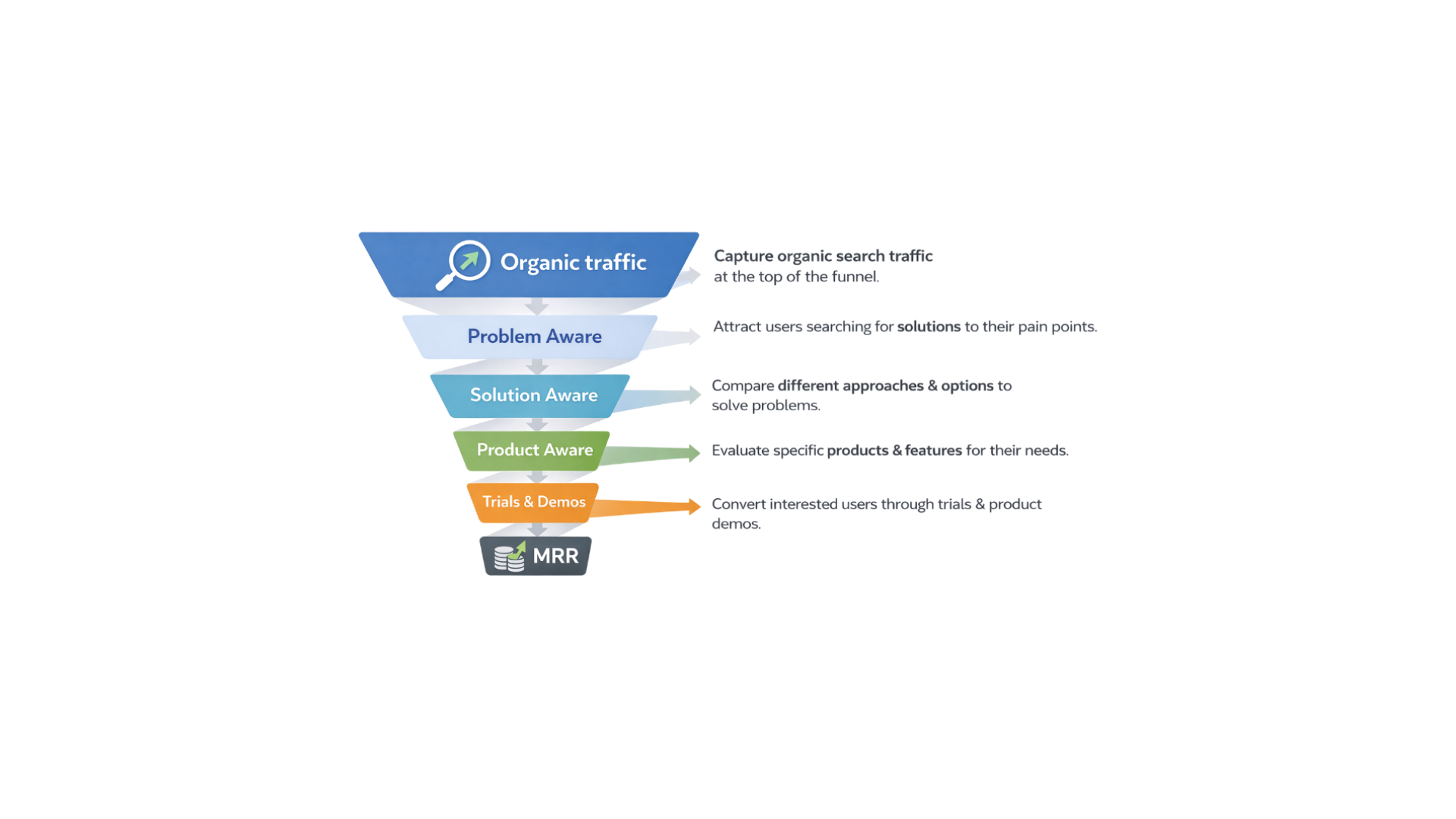
Your buyers are often at the very beginning of realising they have a problem. They’re searching for answers, comparing options, reading about alternatives, and evaluating whether your category is even the right fit for them.
That journey can take weeks or months, and it involves multiple people.
A solid SaaS SEO strategy doesn’t just target the bottom of that funnel. It builds visibility across every stage of it, so your brand is present from the first search to the final decision.
Done well, SEO becomes a predictable, low CAC acquisition channel that keeps working long after the content is published.
How Important Is SEO in a SaaS Business?
The honest answer is: more important than most SaaS teams give it credit for.
Here’s why.
Your ideal customers are searching right now. They’re typing in problems your product solves. They’re searching for tools in your category. They’re comparing you to competitors, even if you don’t know it yet.
If you’re not ranking for those searches, someone else is.
SEO also addresses something that paid channels can’t easily replicate: intent. A user who searches “project management software for remote teams” and lands on your page has told you exactly what they need. That intent-driven traffic converts differently to a cold audience served an ad.
For SaaS specifically, SEO matters because:
- Buying journeys are long. Multiple touchpoints across multiple decision makers means visibility at every stage matters.
- CAC pressure is real. Organic search reduces reliance on paid acquisition and brings down the cost of acquiring each new user over time.
- Compounding returns. Unlike paid, where spend drives volume, SEO builds an asset. Rankings and content that work today keep working.
- LLM and AI visibility. As AI-powered search becomes more prominent, well structured, authoritative content is increasingly what gets surfaced. Your SEO foundation directly influences that visibility, and where that content lives matters too. Platforms like Reddit are increasingly surfaced in AI answers, which changes how brands should think about visibility.
The Stages of the SaaS Buying Journey (and What to Build for Each)
To understand how SEO drives trials and demos, you need to understand the journey your buyer takes before they ever click “start free trial.” or “Request a Demo”
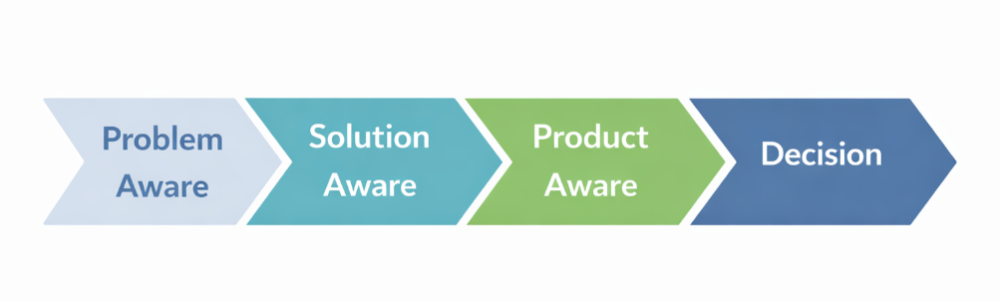
Problem Aware: At this stage, the user knows something isn’t working. They’re not yet searching for tools, they’re searching for answers. Educational content that addresses their pain points, explains why the problem exists, and hints at how it can be solved performs well here. This is your top-of-funnel content.
Solution Aware: Now they know a solution exists. They’re searching for categories, comparisons, and options. This is where your product-led content, competitor alternatives pages, and category level posts come in. If you’re not visible here, you’re not in the consideration set.
Product Aware: They know what they want and they’re evaluating their options. This is where feature comparison pages, use-case content, integration pages, and customer proof become critical. A user searching “[your category] for [specific use case]” is close to a decision. Being visible and clear at this stage directly influences conversion.
Decision Stage: They’re ready to commit. Searches at this stage tend to be branded or highly specific. Your own site needs to perform here, both technically and from a conversion standpoint.
Most SaaS SEO strategies focus too heavily on the first stage and neglect the middle.
How to create an SEO Strategy for a SaaS product
Getting the strategy right comes down to a few interconnected elements.
Keyword and Intent Mapping
Not all keywords are equal, and not all pages should compete for the same terms. One of the most common issues I see in SaaS content plans is keyword cannibalisation, where multiple pages are targeting the same or similar terms, competing with each other and diluting authority.
The fix is to map every target keyword to a single, purpose built page that matches the intent behind the search. That clarity helps both users and search engines understand what each page is for.
Building & Understanding Your Personas
Keyword research tells you what people are searching. Personas tell you who those people are and why they’re searching in the first place.
For SaaS, this matters more than most businesses realise. Your product might solve five different problems for five different types of user. Without a clear picture of who those users are, your content ends up written for everyone, which usually means it can be difficult to resonate.
A useful SaaS persona goes beyond job title and company size. It captures:
- The problem they’re trying to solve: Not the feature they’re looking for, but the underlying pain driving the search
- Where they are in the buying journey: A founder exploring options for the first time needs different content to a head of operations ready to evaluate vendors
- What success looks like for them: Time saved, revenue grown, team unblocked. The outcome they care about shapes the language your content should use
- Who else is involved in the decision: In B2B SaaS, your primary persona rarely makes the purchase alone
Once your personas are defined, everything else sharpens. Keyword choices, content topics, page structure, and CTAs all become easier to get right because you’re writing with a specific person in mind rather than a hypothetical audience.
The most common mistake I see is SaaS teams building personas once and never revisiting them. As your product evolves and your market matures, your personas should too. They’re a living part of your strategy, not a one-time exercise.
Technical Foundations
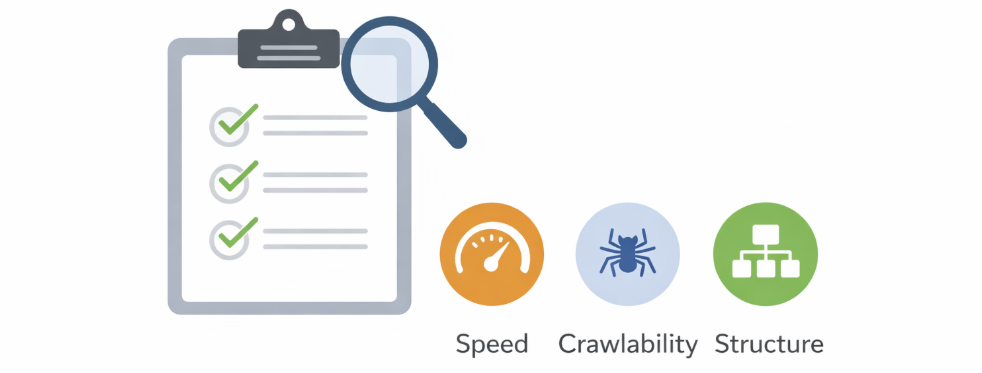
Even the best content won’t rank on a technically broken site. For SaaS specifically, common issues include:
- JavaScript rendering problems that hide content from search engines
- Slow page speeds that frustrate users and impact rankings
- Crawlability issues caused by poor site architecture
- Thin or duplicate product and feature pages
Getting the technical foundation right isn’t glamorous, but it’s what allows everything else to work. If you’re unsure where your site stands technically, an SEO audit is a good place to start.
Product-Led and Educational Content
A strong SaaS content strategy balances two types of content.
Educational content builds awareness, earns trust, and captures early stage searchers. Product-led content connects your solution to specific problems, use cases, and audiences. The most effective strategies don’t treat these as separate, they create a path from one to the other.
Competitor and Alternatives Pages
Users searching “[Competitor] alternative” or “[Your product] vs [Competitor]” are often close to a decision. These pages are frequently overlooked but can be some of the highest-converting content on a SaaS site. Some avoid this, but your buyers are searching this way and your competitors are creating content around this. If your buyer right now searched “[Your product/brand] vs [Competitor]” and you’re missing this key landing page, they’re going straight to a competitor.
Internal Linking
Once you have content at multiple funnel stages, internal linking is what connects it. A user reading an educational post should have a clear, natural path to a product page or a trial CTA. Internal links also reinforce authority by guiding search engines toward your most important pages.
Building Backlinks
Backlinks remain one of the strongest signals search engines use to evaluate authority. For SaaS companies, earning links from credible, relevant sources tells Google that your content and product are worth paying attention to.
The key word is earning. The most effective backlink strategies for SaaS aren’t built on outreach blasts or directory submissions. They’re built on content worth linking to.
That looks like:
- Original data and research: Surveys, industry reports, or unique insights from your own product data. These attract links naturally because they give other writers something to reference.
- Thought leadership content: Well-argued, specific points of view that go beyond what’s already out there. Generic content doesn’t earn links. Distinctive content does.
- Integration and partner pages: If your product integrates with other tools, those relationships are a natural source of relevant, high-quality links.
- Digital PR: Getting your product, data, or expertise featured in industry publications, roundups, and podcasts builds both links and brand awareness simultaneously.
For SaaS specifically, relevance matters as much as volume. A handful of links from respected publications in your category will do more for your authority than dozens of links from unrelated sources.
Building an off-page SEO strategy that earns links from credible, relevant sources tells Google your content and product are worth paying attention to.
Backlinks compound in the same way content does. Built consistently and intentionally, they strengthen the foundation everything else sits on.
How B2B SaaS Companies Can Use SEO to Support the Full Funnel
For B2B SaaS specifically, the decision makers add another layer of complexity. You might be targeting a marketing director and a head of operations at the same company, who are searching entirely different things.
That requires content built for different roles, different pain points, and different stages of the decision.
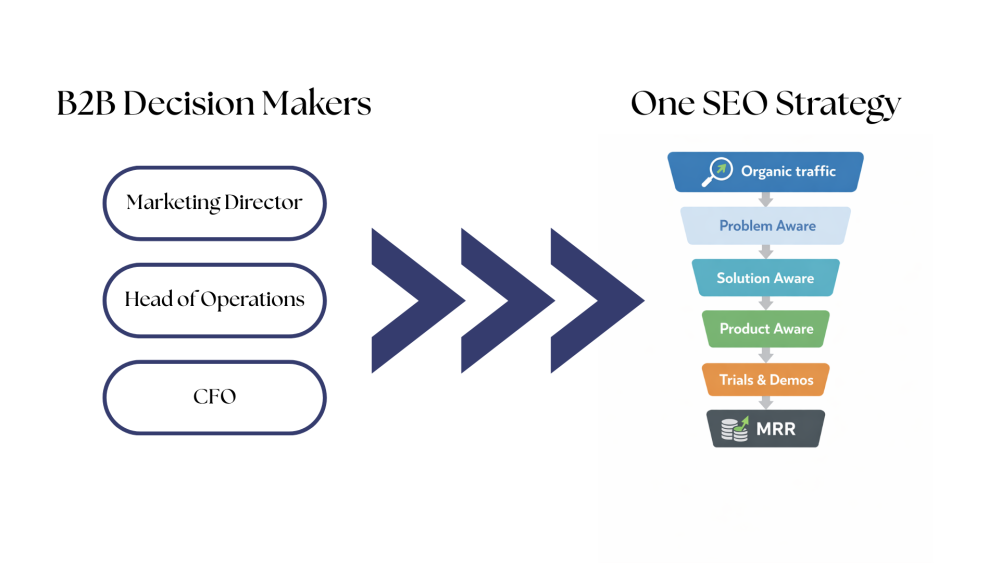
SEO handles this well. You can build pages and content that speak to a head of operations searching for workflow automation, and separately, content that speaks to a CFO searching for ROI on software spend, and have both feeding into the same pipeline.
That kind of full funnel visibility is hard to replicate with paid channels alone, and it’s one of the clearest advantages SEO offers B2B SaaS teams.
What Good SaaS SEO Actually Looks Like in Practice
It’s not just more content. It’s the right content, structured correctly, pointing users in the right direction.
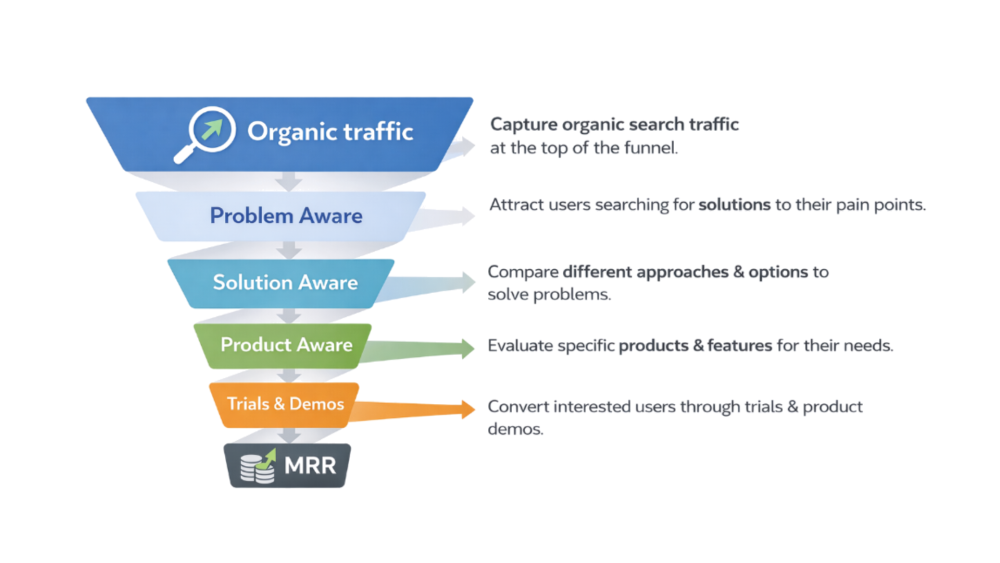
The SaaS companies that see real growth from SEO are the ones tracking what actually matters: trials, demos, and MQLs, not just rankings and sessions.
That means:
- Knowing which pages are driving signups, not just visits
- Understanding how organic users move through the funnel
- Connecting SEO activity directly to pipeline and MRR
- Iterating based on what’s working, not just what’s ranking
Traffic is a vanity metric if it’s not bringing in the right users. SEO done well is a growth channel. One that compounds, scales, and keeps working.
SEO isn’t a slow burn you invest in eventually.
For SaaS companies serious about reducing CAC and building a predictable acquisition channel, it’s one of the most valuable investments you can make, and the earlier you build it properly, the stronger the compounding effect.
If you’re a SaaS founder, marketer, or growth lead wondering whether your SEO is actually working as hard as it should be, let’s talk.